Last updated October 15, 2026
The Complete Guide to ADU in Dallas
Dallas loosened its ADU ordinance in 2023, and the city still rejects a significant share of first-time permit applications. Most of those rejections trace back to one thing: the homeowner made decisions in the wrong order. They picked a unit design before checking lot eligibility. They hired a contractor before knowing their budget ceiling. They filed permits before understanding what the city actually requires. This guide maps the correct sequence of seven decisions, so you don’t pay for mistakes that could have been caught on paper. We build ADUs in Dallas every month, and we’ve seen where the process breaks.
Quick Answer
An ADU in Dallas typically costs between $120,000 and $280,000 for a detached unit, with garage conversions running $80,000 to $150,000 before permit fees. The city now allows ADUs on most single-family lots under the 2023 ordinance reform, but owner-occupancy rules and lot-coverage limits still apply. Getting the order of decisions right, lot eligibility first, budget second, unit type third, is what separates a smooth build from a stalled one.
Table of Contents
- Decision One: Lot Eligibility Comes Before Everything
- Decision Two: Set a Real Budget Ceiling Before You Shop Unit Types
- Decision Three: Match the Unit Type to Your Lot and Budget
- Decision Four: Choose a Contractor With a Written Price in Hand
- Decision Five: File Permits the Right Way the First Time
- Decision Six: Understand the Real Timeline From Permit to Certificate of Occupancy
- Decision Seven: Get the One-Year Guarantee in Writing Before You Sign
- Common Mistakes to Avoid
- When to Call a Professional
- Frequently Asked Questions
- The Bottom Line
Decision One: Lot Eligibility Comes Before Everything
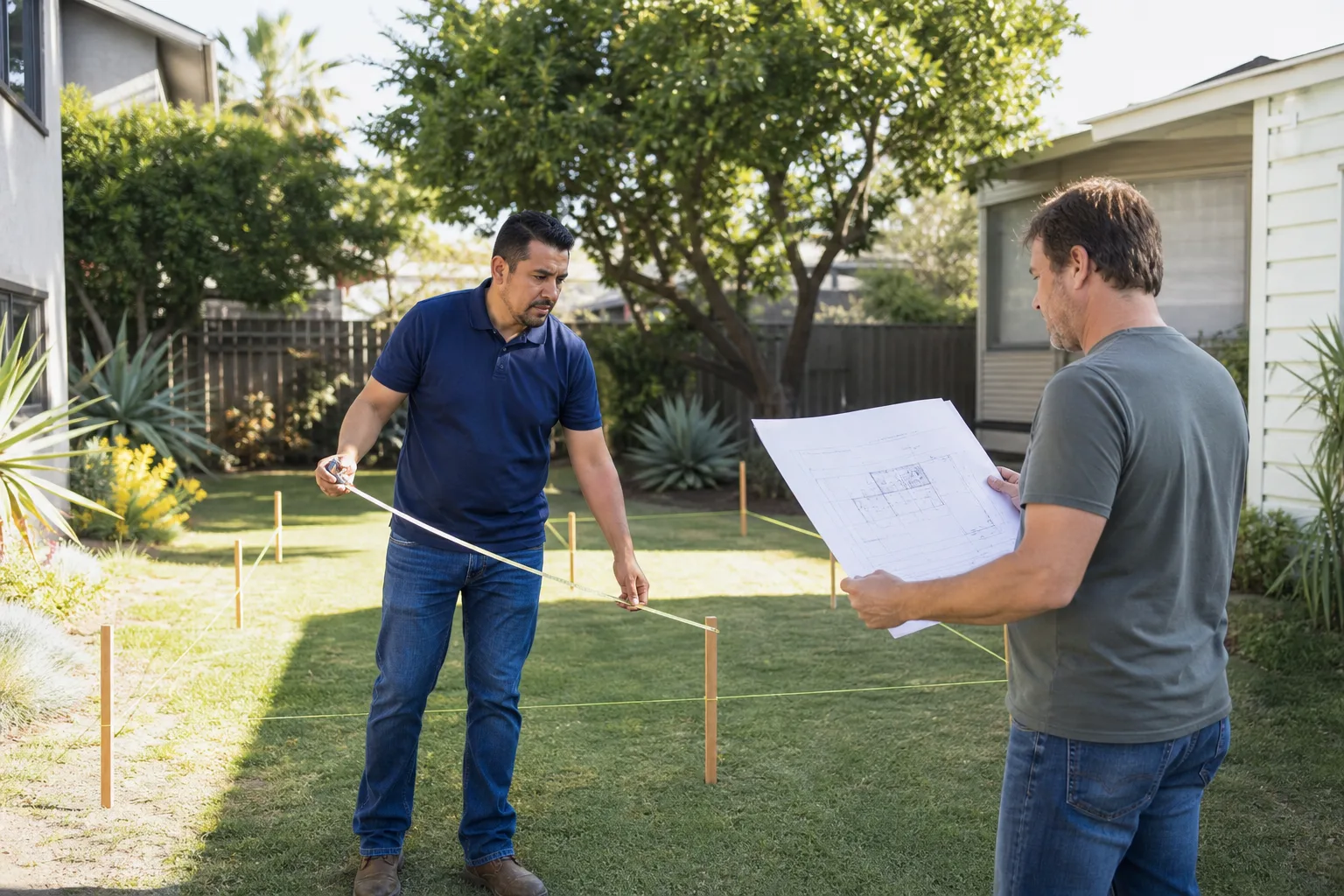
Before you sketch a floor plan, before you tour a prefab showroom, before you call a single contractor, you need to know whether your lot can legally hold an ADU. The City of Dallas updated its accessory dwelling unit ordinance in 2023, and the rules are more permissive than they used to be, but they are not wide open. Lot coverage limits still apply. Setback requirements still apply. And the owner-occupancy provision, which requires either the primary dwelling or the ADU to be owner-occupied, still catches people off guard. In our experience building ADUs across Dallas neighborhoods from Lake Highlands to Oak Cliff to Preston Hollow, the homeowners who skip this step are the same ones who later discover their planned unit is three feet too close to the side property line. That’s a redesign, not a tweak.
Here’s what to check on paper before anything else:
- Zoning district: Most single-family residential zones (R-5, R-7.5, R-10, R-16) now permit ADUs by right, but each zone carries its own lot coverage maximum. An R-7.5 lot, common across East Dallas, will have a different coverage allowance than an R-16 lot in North Dallas.
- Lot coverage limit: This is the percentage of your lot that can be covered by structures. The city’s combined coverage cap for the primary home plus the ADU is typically 45% for a single-story ADU, but you need to check your specific zone. A 6,000-square-foot lot with a 2,200-square-foot house already at 37% coverage leaves less room for an ADU than most people assume.
- Setbacks: Detached ADUs generally need 3 feet from side and rear property lines, but corner lots and alley-facing lots have different rules. Setback variance (the city’s written permission to build closer to the property line than the standard rule allows) exists but adds time and uncertainty to the process.
- Owner occupancy: Dallas requires the property owner to live in either the primary residence or the ADU. This is not a short-term rental loophole situation. If you plan to rent both units and live elsewhere, the city will reject the application.
- FAR and height limits: Floor area ratio caps total square footage relative to lot size, and detached ADUs are generally limited to one story or about 25 feet in height, whichever is lower.
Check these numbers against your lot before you spend a dollar on design. You can look up your zoning and lot dimensions through the City of Dallas Development Services Department or ask a contractor who builds ADUs in Dallas to run a feasibility check. ADU builders in Dallas who know the city’s post-2023 rules can usually tell you within a day or two whether your lot will work.
Decision Two: Set a Real Budget Ceiling Before You Shop Unit Types
Most homeowners start with the unit type. They see a Cover or Abodu prefab online, fall in love with the design, and then work backward to justify the price. That’s the sequence that produces budget overruns. The correct order is to set a hard ceiling for total project cost, including site work, then shop only the unit types that fit inside that number. Dallas dirt is clay-heavy in a lot of the city, particularly in the eastern and southern neighborhoods, and that affects foundation costs. A unit priced at $95,000 on a manufacturer’s website can easily reach $140,000 by the time you add foundation work, utility trenching, and permitting. Understanding the real numbers before you pick a unit keeps you from signing a deposit on something you can’t afford to finish.
What a realistic Dallas ADU budget looks like:
- Garage conversion: $80,000 to $150,000. This assumes the existing slab and framing pass inspection. If the garage was built before 1990 and never permitted as living space, factor in structural and electrical upgrades.
- Detached ADU, conventional build: $140,000 to $280,000. This is stick-built on site with traditional framing, roofing, and James Hardie siding or similar exterior. The range is wide because site conditions in Dallas vary from flat, open backyards in suburban-style lots to tight, pier-and-beam situations in older neighborhoods like Old East Dallas.
- Detached ADU, prefab or modular: $120,000 to $240,000 all-in. Brands like Abodu, Cover, Dvele, and Mighty Buildings deliver units that are built in a factory and craned or assembled on your slab. The unit cost is often clearer up front, but you still pay for site preparation, permits, and utility connections separately.
- Permit fees and impact fees: Budget $5,000 to $12,000 for city permit fees, plan review, and water/sewer connection charges. These are not optional and they are not included in most contractor quotes.
- Site work contingency: Hold 10% of your total budget for surprises. Tree removal in Dallas can trigger city approval. Older lots in Lakewood and Junius Heights often have unknown utility lines. Soil conditions in parts of South Dallas may require deeper footings than standard.
Once your ceiling is fixed, the unit type decision becomes mechanical. If your ceiling is $100,000, you’re looking at a garage conversion or a small prefab with a simple foundation. If your ceiling is $220,000, a detached Dvele unit with nicer finishes is in range. If your ceiling is $300,000, you can build a two-bedroom ADU with custom interiors. The ceiling disciplines everything else. Set it first.
Decision Three: Match the Unit Type to Your Lot and Budget
Dallas homeowners now have more ADU building methods available than at any point in the city’s history, and most people don’t know the trade-offs between them. The right unit type is not the one with the best rendering. It’s the one that fits your lot dimensions, your access for construction equipment, your budget ceiling, and your rental or family-use goals. We work with both prefab and conventional builds at Fielding ADU Dallas, and we’ve seen the same model succeed on one lot and fail on another, which is why our DIY vs Professional ADU: The Dallas Homeowner’s Decision Guide starts with lot assessment. The lot decides more than the floor plan does.
Here’s a straight comparison of the main options in the Dallas market:
- Prefab from Abodu or Cover: These units arrive in sections and are assembled on site in a matter of weeks, not months. Abodu tends to run on the smaller side, 340 to 500 square feet, which works well for a studio or one-bedroom on a compact Dallas lot. Cover builds panelized units that allow more customization. Both require a foundation to be poured ahead of delivery, and both need crane access to the backyard. If your lot is landlocked with no alley and no side yard wider than 4 feet, prefab may not be feasible.
- Modular from Dvele or Mighty Buildings: These are higher-end factory-built units with strong energy performance and a more finished aesthetic. Dvele units can reach 1,000 square feet or more, which stretches what an ADU can be. Mighty Buildings uses panelized composite construction that goes up fast. Expect these to land at the top of your budget. The trade-off is speed and dimensional precision versus cost per square foot.
- Conventional stick-built: Your ADU is framed, sheathed, and finished on site by a local crew. This gives you complete control over the building envelope and exterior finishes. Want James Hardie siding to match your primary home exactly? Prefab factories can’t always match. Want a specific roofline or porch? Stick-built handles it. The trade-off is time. A conventional Dallas ADU takes 5 to 9 months from permit to completion, where a prefab might be done in 3 to 5.
- Garage conversion: On a lot where the detached garage already exists and is structurally sound, a conversion is the most cost-effective path to an ADU in Dallas. You’re not paying for foundation work or a new shell. The budget goes into insulation, electrical, plumbing, drywall, and finishes. The limitation is size. A typical Dallas garage is 400 to 500 square feet, which means a studio or one-bedroom layout.
Our recommendation after building across Dallas: let the lot speak first. A narrow lot in Vickery Place with alley access may favor a narrow prefab. A wide lot in Far North Dallas with no rear access favors conventional stick-built. A detached garage in Winnetka Heights favors conversion. The unit type is the result of two earlier decisions, not the starting point.
Decision Four: Choose a Contractor With a Written Price in Hand
Here is where Dallas homeowners get burned most often. They collect three bids. The numbers are thousands of dollars apart. Nobody explains what’s included. The lowest bid wins by default. Then the change orders start. The final price lands higher than the highest bid, and the homeowner feels like a fool. We see this pattern repeat in every neighborhood from Bishop Arts to Casa View. The fix is brutally simple: demand a written price before you sign anything. Not an estimate. Not a ballpark. A written, line-item price that says what is included, what is excluded, and what the allowance amounts are for finishes you haven’t selected yet.
Fielding ADU Dallas operates under The Garrison Standard, which begins with a written price before any work starts. The number you approve on day one is the number on the final invoice. That policy exists because Reed Calloway, our owner, spent years watching contractors in this market move the price after the job was underway. He built Fielding ADU Dallas to be the opposite of that. The written price includes the specific scope: foundation type, framing method, exterior finish, electrical panel capacity, plumbing rough-in, drywall, paint, and the specific allowance amounts for flooring, fixtures, and cabinets. If you choose finishes above the allowance, you know the upcharge before the work happens. If you choose below, the price goes down.
What most bids quietly leave out, and what your written price should name:
- Permit fees and plan review charges. Many contractors quote “construction only” and treat city fees as an owner responsibility without saying so at the start. Dallas permit fees for an ADU run into the thousands. Know who pays them.
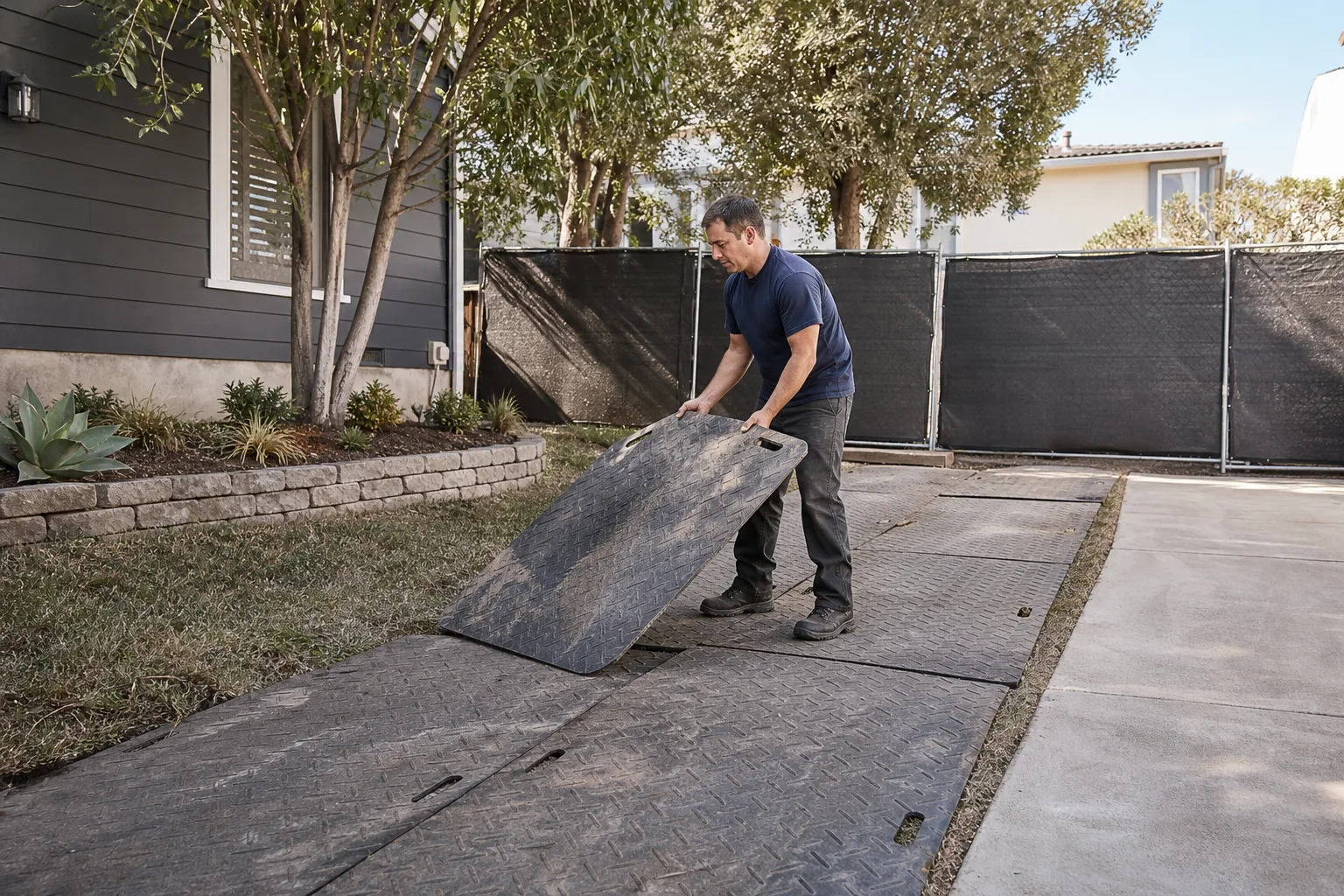
- Utility connection costs. Water, sewer, and electrical connections from the ADU to the main lines are not always included. Trenching across a Dallas backyard in clay soil costs real money. Get it in writing.
- Site preparation and demolition. If there’s an old shed, a cracked slab, or a tree stump in the way, who pays to remove it? The written price should state it.
- Interior finishes. Many low bids include builder-grade everything and then hit you with upgrade charges for the flooring, tile, and fixtures you actually want. Your written price should state the allowance for each finish category.
- Change order process. What happens if you want to add a window or move a wall during construction? A written price should include the change order rate and process so you’re not negotiating in the dark.
Ask every contractor you consider in Dallas: “Will you put the full price in writing before the permit filing?” If the answer is anything but yes, walk. A contractor who can’t price the job before starting it doesn’t understand the job. Room additions in Dallas follow the same rule: written price first, always.
Decision Five: File Permits the Right Way the First Time
The City of Dallas Development Services Department rejects a meaningful share of ADU permit applications on the first submission. Our experience tracks with that: maybe three in ten first filings come back for corrections. The rejection reasons are usually simple. Wrong lot coverage calculation. Missing owner-occupancy affidavit. Site plan without the required setback dimensions. An engineer’s stamp missing on the foundation plan. None of these are complicated to fix, but each resubmission adds two to four weeks to your timeline. On a six-month project, that’s the difference between a fall completion and a winter completion.
The permit process in Dallas after the 2023 ADU ordinance reform, step by step:
- Pre-application feasibility check. Confirm zoning, lot coverage, setbacks, and owner-occupancy compliance using your specific address. This is Decision One, done formally.
- Site plan preparation. Your designer or architect draws the existing structures, proposed ADU footprint, setback distances, lot dimensions, and utility locations. This document carries the most common rejection errors.
- Building plan preparation. Foundation plan, framing plan, electrical layout, plumbing layout, and energy compliance documentation. This is where the structural engineer’s stamp is required.
- Application submission. Filed through the city’s online portal or in person. Application fees are paid at this point. Plan review fees are separate and typically due before the first review cycle.
- Plan review. The city reviews your submittal against building code and the ADU ordinance. This takes two to six weeks depending on workload and completeness. Corrections come back in a written review letter.
- Corrections and resubmission. You address the city’s comments and resubmit. A clean resubmission is usually approved in one to two weeks. A messy one starts another review cycle.
- Permit issuance. You receive the building permit. Construction can legally begin, and the city’s inspection schedule is tied to this permit number.
File it right the first time. A contractor who builds ADUs in Dallas should be able to handle this entire process, including the corrections, without you spending evenings on the city’s portal. Ask who files the permits, who answers the review comments, and whether the permit filing is included in the written price. At Fielding ADU Dallas, permit filing and plan review management are part of our scope, not an add-on.
Decision Six: Understand the Real Timeline From Permit to Certificate of Occupancy
Here’s the timeline no one in Dallas wants to tell you up front. The optimistic version is: permit in 4 weeks, construction in 12, Certificate of Occupancy at month 4, tenant moves in at month 5. The real version, based on what we see across Dallas projects, runs longer. Prefab ADUs from Abodu or Cover compress the construction phase but not the permit phase. Conventional stick-built ADUs extend the construction phase but give you more control over the schedule. The truth is that a Dallas ADU project takes 5 to 9 months from first application to final inspection on average, and 8 to 12 months is not unusual when the lot has complications.
What actually drives the timeline, and how each phase runs in Dallas:
- Plan preparation: 2 to 4 weeks. A designer or architect takes your site measurements and produces the permit drawings. Rushing this phase is how errors end up in the submittal.
- First plan review: 2 to 6 weeks. The city’s review queue varies. Heavy submission months around spring and summer slow everything down.
- Corrections: 1 to 4 weeks. If your application gets comments, each correction cycle adds time.
- Permit issuance: 1 week. Once approved, getting the physical permit is fast.
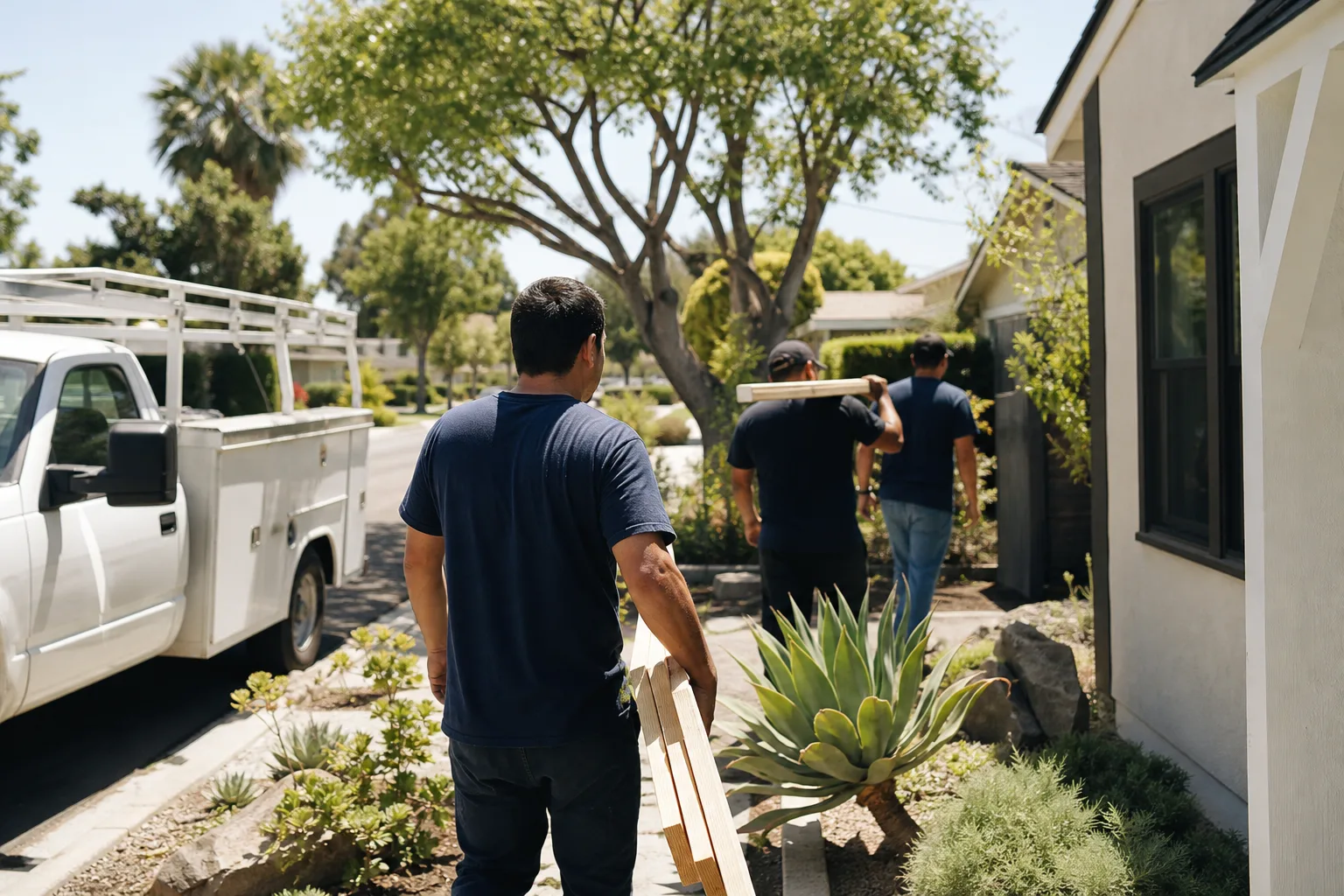
- Construction, prefab: 8 to 16 weeks. Foundation pour, utility rough-in, unit delivery and set, interior and exterior finishing, final punch list.
- Construction, conventional: 16 to 28 weeks. Framing, roofing, siding, rough mechanicals, insulation, drywall, finishes. Weather delays in Dallas spring storms can push this.
- Inspections: 2 to 4 weeks. Dallas requires inspections at foundation, framing, rough-in, and final stages. Scheduling inspection slots can add days between phases.
- Certificate of Occupancy: 1 to 2 weeks after final inspection clears. The COO is what makes the ADU legally rentable or habitable.
Plan for the real timeline, not the brochure version. If a Dallas contractor promises a 12-week turnkey ADU from signing to COO, ask what they’re leaving out. Usually it’s the permit phase. Sometimes it’s the inspections. Rarely is that promise true. Garage conversions in Dallas can run faster because the shell already exists, but the permit phase still takes the same amount of time.
Decision Seven: Get the One-Year Guarantee in Writing Before You Sign
This is the decision almost no Dallas homeowner thinks to make until something goes wrong. A roof leak at month ten. A cracked drywall seam at month eleven. A door that won’t latch after the first full summer of clay-soil movement. Contractors in this market give verbal assurances all the time. “We’ll come back if anything’s wrong.” Then the phone rings, the voicemail picks up, and the callback never comes. The question to ask any ADU contractor before signing a contract is simple: “Will you give me a written one-year guarantee on defects?” (Our Room Addition Contractor Maintenance Checklist for Dallas Homeowners covers what else to verify before work begins.) If the answer is no, or if the guarantee isn’t in the contract language, that’s your signal.
Fielding ADU Dallas backs every project with the 365-Day Done Right Promise, part of The Garrison Standard that has governed the Garrison Partners family since 2006. Here’s what that means in plain terms: if our workmanship fails within one full year of completion, we return and correct the defect at no charge. The guarantee is spelled out on paper, it names what it covers and how long it runs, and it’s part of the contract, not a verbal add-on. There is no fine print about “normal settling” excluding the drywall crack. There is no exclusion for the roof flashing we installed. If we did the work and it failed inside the year, we fix it. That’s the whole policy.
Why this matters more in Dallas than in some other markets: the soil here moves. North Texas clay expands and contracts dramatically with seasonal moisture changes. Your primary home has been settling on its foundation for decades and has found its equilibrium. A new ADU on a new foundation has not. The first year is when settlement cracks, door misalignment, and minor slab movement show up. It’s also when a contractor who stands behind the work proves it. Before you sign, read the guarantee language. If it’s not in writing, it doesn’t exist.
Common Mistakes to Avoid
- Designing the ADU before checking lot eligibility. You fall in love with a floor plan, then discover your lot coverage cap leaves you 200 square feet short of the design. The design dies, and you’ve paid for it. Check eligibility first, design second.
- Picking the lowest bid without comparing scope. A Dallas contractor who bids $90,000 for a detached ADU is leaving something out. Either the finishes are builder-grade, the site work is excluded, or the permit fees are not in the number. Compare line items, not headline prices.
- Signing a contract without a written price. If the price is not in writing with line items and allowances, you have signed an open check. Dallas is full of homeowners who learned this the hard way on additions and ADUs alike.
- Skipping the owner-occupancy affidavit. The city requires proof that you or a tenant will occupy either the main home or the ADU. Forgetting this document is one of the most common first-round rejection reasons in Dallas.
- Underestimating site work. Clay soil, tree roots, old utility lines, and a backyard that looks flat but isn’t. Site preparation in Dallas routinely adds $10,000 to $20,000 to a project that a naive quote ignored.
- Assuming prefab means no permits. Prefab and modular units still require full city permitting, foundation permits, and utility connection approvals in Dallas. The factory builds the unit to code, but the city still reviews the site plan and foundation.
- Not getting the guarantee in writing. The contractor’s verbal promise dies the day the final check clears. A written one-year guarantee, like the one Fielding ADU Dallas provides on every project, is the only version that means anything.
When to Call a Professional
If your lot has coverage questions, unusual setbacks, or an existing structure that might become the ADU shell, call a Dallas ADU specialist before you spend money on design. If you have a budget ceiling and need an honest read on which unit types fit inside it, call. If you’ve received bids that don’t match and you want a line-item written price to compare them against, call. If you’ve been burned by a contractor before and you’re not willing to get burned again, call. Fielding ADU Dallas offers free estimates in Dallas, and we answer the phone with a live person 24 hours a day, 7 days a week. Call (903) 342-8977 to schedule yours.
Frequently Asked Questions
A detached ADU in Dallas typically costs $120,000 to $280,000 for a conventional build and $120,000 to $240,000 for a prefab unit from a manufacturer like Abodu or Cover. A garage conversion runs $80,000 to $150,000. Those ranges include construction and site work but not always permit fees, which add $5,000 to $12,000. Call (903) 342-8977 for a written quote with the full line-item breakdown.
Yes. The ADU ordinance requires the property owner to occupy either the primary dwelling or the ADU as their principal residence. This is called an owner-occupancy requirement, and it’s a first-round permit rejection when the affidavit is missing. If you plan to buy a property, add an ADU, and rent both units while living elsewhere, the city will not approve the permit.
Most Dallas single-family zones cap total lot coverage at 45% for a single-story ADU combined with the primary dwelling, but the exact percentage depends on your specific zoning district. R-7.5 zones, common in East Dallas, have different numbers than R-16 zones in North Dallas. Check your zone against the city’s current development code before you plan any structure.
Plan review for a Dallas ADU permit typically takes 2 to 6 weeks for the first review cycle, and a clean submittal can be approved without corrections. A submittal with errors will get a correction letter and add 1 to 4 weeks per resubmission. The full timeline from application to Certificate of Occupancy runs 5 to 9 months for most projects, and 8 to 12 months when complications arise. Call (903) 342-8977 if you want a realistic timeline for your specific lot.
In many cases, yes. Prefab units from Abodu, Cover, and similar manufacturers are permitted in Dallas under the same ADU ordinance that governs conventional builds. The limiting factors are typically lot access for delivery equipment and the foundation requirements. If your lot has no alley access and no side yard wide enough for a crane or delivery truck, a prefab may not be practical. We work with Abodu, Cover, Dvele, and Mighty Buildings at Fielding ADU Dallas and can tell you quickly whether your lot will work.
A written ADU price should include the construction scope, the foundation type, the exterior finish system, the electrical panel capacity, the plumbing rough-in, the drywall and paint, and specific allowance amounts for flooring, fixtures, and cabinets. It should also state who pays the permit fees, who handles the utility connections, and what the change order process costs. If any of those items is missing from the written price, it’s not a complete price. Fielding ADU Dallas puts the full price in writing before any work starts, every time.
The Bottom Line
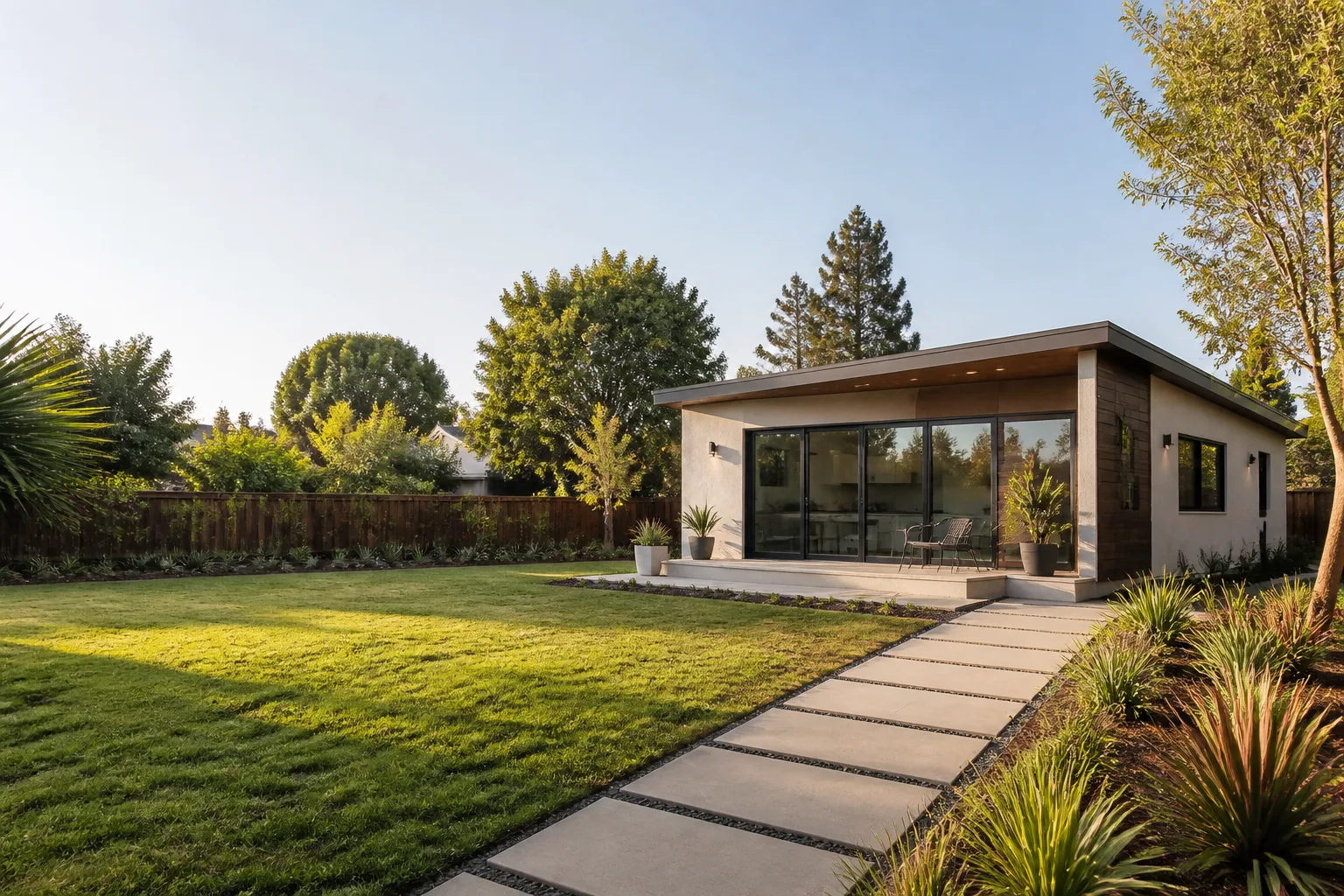
Building an ADU in Dallas is a chain of seven decisions, and the order matters more than most homeowners realize. Lot eligibility precedes design. Budget ceiling precedes unit selection. Unit type precedes contractor choice. Written price precedes signature. Permit filing precedes groundbreaking. The real timeline precedes your expectations. And the written one-year guarantee precedes the final payment. Get the order right and the process is manageable, even if Dallas clay soil and city bureaucracy make it longer than you’d like. Get the order wrong and you’ll pay twice. Fielding ADU Dallas has built to The Garrison Standard since 2006: the price goes in writing before work starts, the work is permitted by the book, and every project carries a written one-year guarantee. If you’re ready to start the sequence correctly, explore more guides & resources or call us at (903) 342-8977 for a free estimate.
Written by Reed Calloway, Owner at Fielding ADU Dallas, serving Dallas since 2006.