HOA & Zoning Compliance in Dallas, TX
HOA and zoning compliance in Dallas means getting written approval from your neighborhood association and the City of Dallas before construction starts, so your ADU or addition doesn’t get red-tagged, fined, or torn down. Most Dallas ADU projects need both: a zoning review from the city plus a separate sign-off from your HOA’s architectural control committee. We handle the paperwork, the meetings, the revisions, and the follow-up. Call (903) 342-8977 and we’ll tell you straight whether your lot can support an ADU under current Dallas code.
Fielding ADU Dallas runs compliance as part of our ADU Design & Permitting in Dallas work, not as a hand-off to some third-party expediter you never meet. Reed Calloway oversees every compliance file personally. The goal is simple: you get a permit board that matches your plans, an HOA letter that matches your permit, and no surprises at final inspection.
Why HOA & Zoning Compliance Decides Whether Your ADU Happens
In Dallas, the zoning code changed in 2023 to allow ADUs on most single-family lots citywide. That was the good news. The bad news is that “allowed” does not mean “automatic.” Your lot still has to clear setback rules, height limits, lot-coverage caps, parking requirements, and sometimes a tree-preservation review. If your home sits inside a neighborhood with deed restrictions or a mandatory HOA, you have a second approval track running alongside the city one, and the two don’t always agree.
We have seen Dallas homeowners lose six months and four figures because they started with the city, got the permit, and only then discovered their HOA wouldn’t approve the design. Compliance in the wrong order costs real money. We run both tracks at once so you’re never holding a city permit your HOA refuses to bless.
When You Need HOA & Zoning Compliance
If any of these describe your situation, this service is where your project actually starts:
- Your HOA has an architectural review committee. Most Dallas HOAs require written approval before any exterior change, including a backyard ADU visible from the street or a neighbor’s second story. Skipping this step can trigger fines, stop-work orders, or a demand to tear the structure down.
- Your lot is under 5,000 square feet. Smaller lots in neighborhoods like Lakewood, East Dallas, and parts of Oak Cliff push right up against Dallas lot-coverage limits. You’ll likely need a variance or a creative footprint to fit an ADU legally.
- You’re within 5 feet of a property line. Dallas setback rules for detached ADUs typically require space between the structure and the lot line. If your planned build sits closer, you need setback relief, and that means a variance application with real documentation.
- Your neighborhood has a conservation district or historic overlay. Areas like Munger Place, Swiss Avenue, and parts of Oak Cliff carry additional design review above and beyond base zoning. We’ve worked through those review boards before.
- You want a two-story ADU or a garage conversion with a second unit above. Height limits and parking requirements get complicated fast. A two-story ADU in Dallas often triggers a parking study or a deeper zoning review than a single-story build.
- Your HOA denied a previous application. We review the denial letter, figure out what the committee actually objected to, and re-file with revisions that address the stated reasons. Most denials are fixable with the right drawings and the right cover letter.
If you’re not sure whether your HOA has teeth, check your deed restrictions. If you don’t have them, call the City of Dallas zoning office or just call us; we’ll pull your lot’s zoning designation and tell you what it allows before you spend a dollar on design.
Our HOA & Zoning Compliance Process
Here is the sequence we follow, in order, every time:
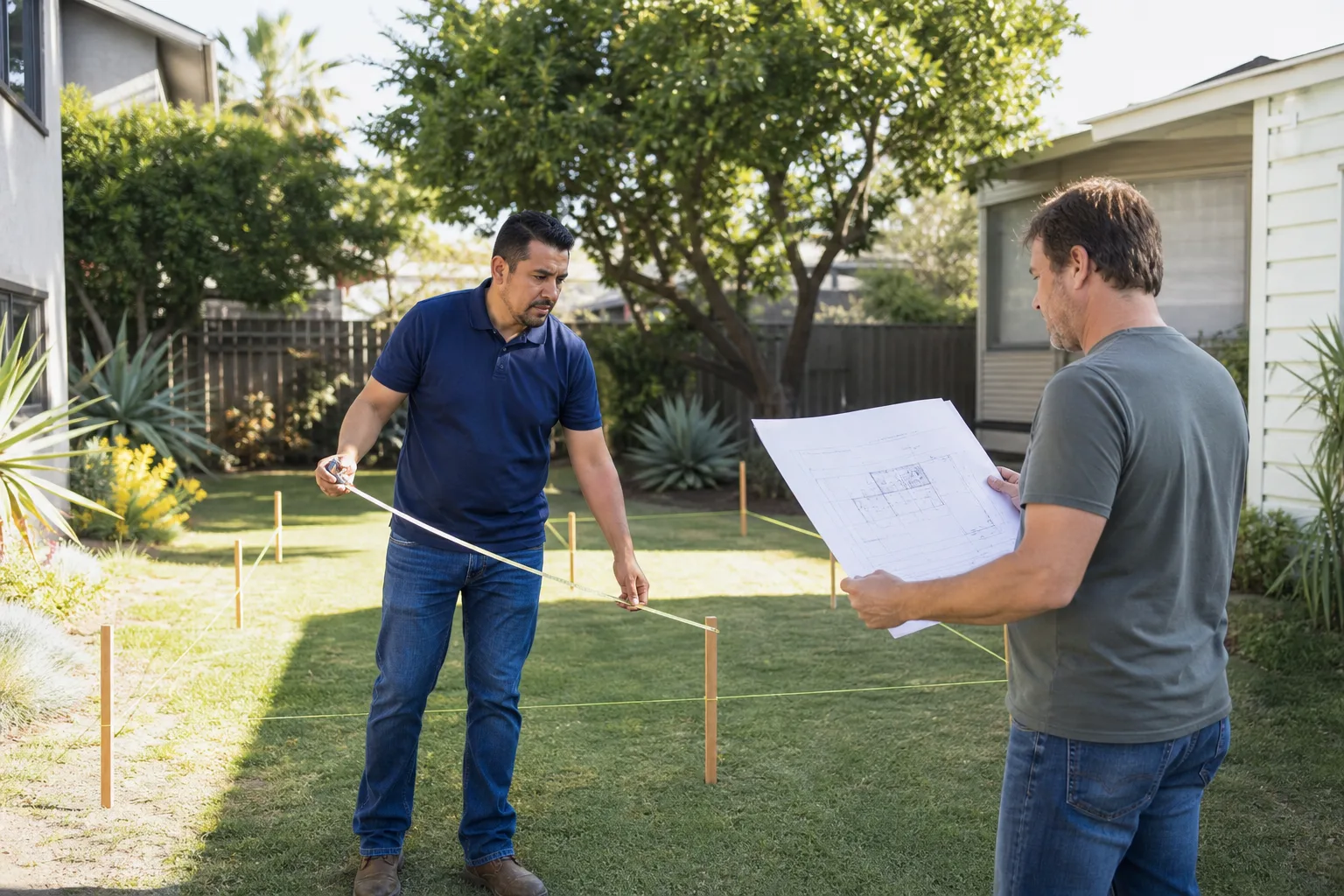
- Lot and deed review. We pull your zoning designation, your recorded deed restrictions, your HOA’s covenants if they exist, and your lot’s survey. We’re looking for conflicts between what the city allows and what your HOA restricts before either side sees a design. This step catches the problems that kill projects later.
- Code gap analysis. We map your planned ADU against current Dallas development code: setbacks, height, lot coverage, parking, utility access. If something doesn’t fit, we tell you what your options are: revise the design, file for a variance, or both. You get this in writing.
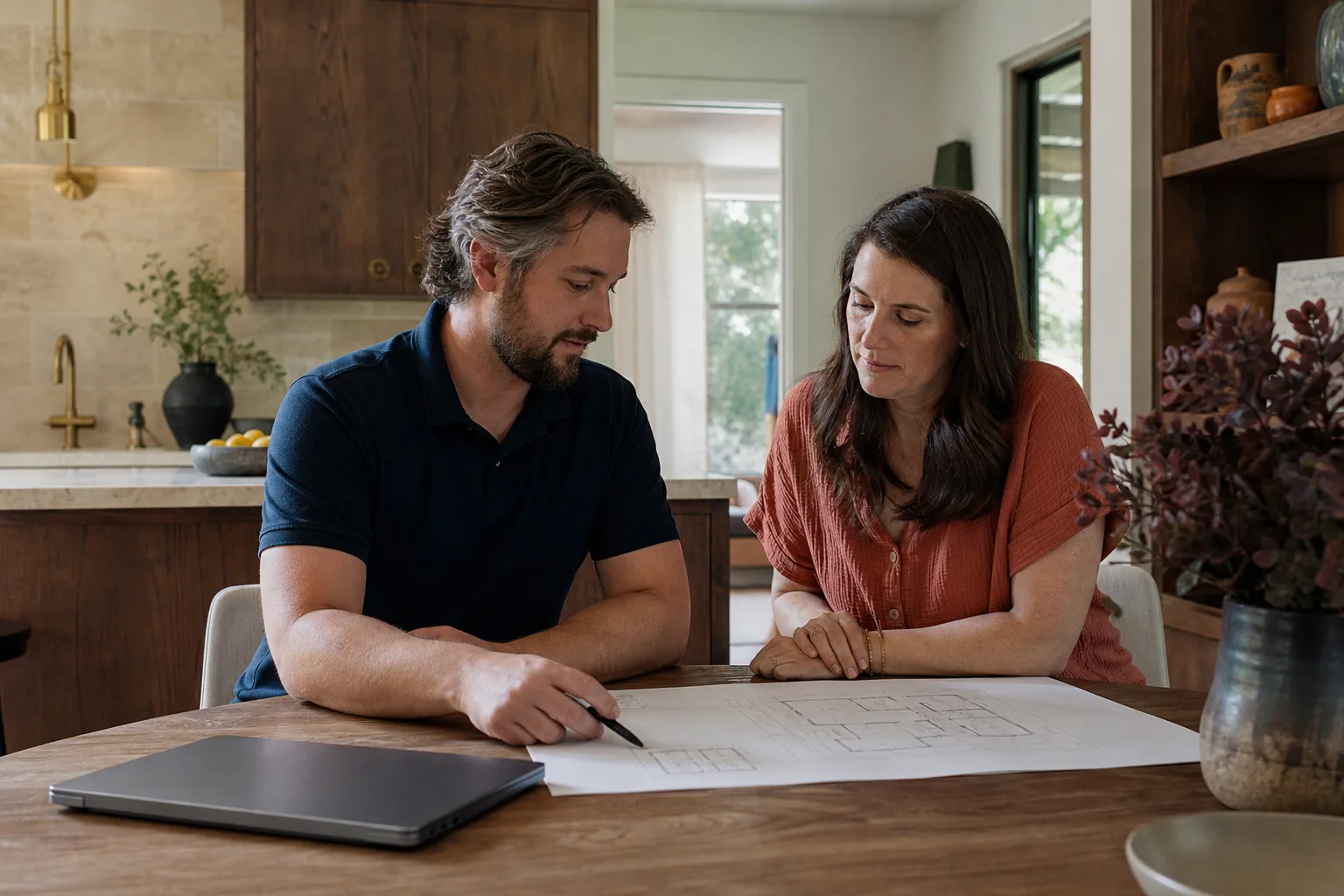
- HOA submission package. We prepare the full architectural review package your HOA requires: site plan, elevations, materials list, color swatches, and a cover letter written in the committee’s language. Most Dallas HOAs review packages monthly or quarterly, so getting the package right the first time saves you a full cycle of delay.
- Variance and special-permit filings (when needed). If your project requires a setback variance or special permit, we draft the application, the hardship statement, and the supporting exhibits, then file with the City of Dallas Board of Adjustment. Reed Calloway represents you at the hearing if one is scheduled.
- Permit filing and corrections. Once zoning and HOA approval are secured, we file the building permit package and answer every plan-review comment the city sends back. We don’t walk away after filing; we stay on the file until the permit is issued.
- Approval hand-off to construction. You get a clean package: city permit in hand, HOA approval letter in hand, both matching. Construction starts with a board on the fence and paperwork that holds up to inspection.
Every step of this process runs on the same rule that governs all our work: written price before any work starts, permitted work done by the book, and a full year of written guarantee. That’s The Garrison Standard, and it has been our operating code since 2006, when Garrison Partners first started building this way.
HOA & Zoning Compliance Pricing in Dallas
Compliance work is billed separately from design and construction because it’s a different job with different variables. Here are the ranges we quote in Dallas as of 2026:
| Service | Typical Range | What It Includes |
|---|---|---|
| Zoning feasibility review | $350 – $750 | Lot pull, zoning verification, code gap analysis, written findings |
| HOA submission package | $500 – $1,200 | Drawings, materials list, cover letter, committee-ready packaging |
| Setback variance application | $1,200 – $2,800 | Application, hardship statement, exhibits, filing fees, hearing prep |
| Full HOA + zoning compliance (typical bundled) | $1,800 – $4,500 | Everything above, run concurrently, through permit issuance |
What moves the price: whether you need a variance or just a straightforward review, how responsive your HOA committee is, whether your lot has floodplain or tree-preservation overlays, and how many revision cycles the city sends back. A simple backyard ADU on a standard lot with no HOA typically lands at the low end. A two-story unit on a constricted lot inside a historic district with an active HOA lands at the high end.
You’ll get the exact number in writing before we start the compliance work, same as our construction pricing. No hourly billing surprises, no “additional services” line items you never approved. Call (903) 342-8977 for a free estimate; we’ll be straight with you about what your lot and HOA actually require.
Dallas Zoning Rules That Actually Affect ADUs
The Dallas Development Code is not a gentle read, but a handful of rules drive most ADU compliance decisions. Here’s what we deal with most often, in plain terms:
- Setbacks. Detached ADUs generally need clearance from the rear and side property lines. The exact distance depends on your zoning district and whether the structure is one story or two.
- Lot coverage. Dallas caps how much of your lot can be covered by buildings and paving. An ADU adds to that total. On smaller lots, this single rule kills more ADUs than any other.
- Height limits. Most Dallas single-family zones cap accessory structures at one story or roughly 15 feet, depending on the district. A two-story garage ADU often needs a special permit.
- Parking. Some Dallas neighborhoods require off-street parking for the ADU’s occupants, which can force a design revision on a tight lot.
- Design district overlays. If your property sits in a conservation district, historic district, or Neighborhood Stabilization Overlay, additional design review applies. Expect a longer review and stricter rules on exterior materials.
If any of these rules threaten your project, we tell you up front. Then we give you options: redesign, variance, or a different build method. A prefab unit from Mighty Buildings or Boxabl may fit a lot that a conventional stick-built ADU cannot, simply because the footprint and height specs are different. That’s the advantage of working with a builder fluent in both conventional construction and prefab platforms; you’re not locked into one answer.
How HOAs Actually Behave in Dallas
Dallas has a patchwork of HOA realities. Some neighborhoods have a mandatory HOA with real enforcement power and monthly architectural reviews. Others have dormant HOAs that collect dues and nothing else. Some have no HOA at all, just deed restrictions recorded decades ago that still bind the property.
What we’ve learned from handling compliance across Dallas:
- HOAs move slower than the city. A Dallas building permit might turn around in 2-4 weeks. An HOA architectural review often runs 30-60 days, and some committees only meet quarterly. We build that delay into your timeline from day one so you’re not standing on a bare lot wondering where the approval is.
- HOA rules and city rules conflict more often than homeowners expect. Your HOA might ban structures under 500 square feet, while the city encourages them. Or the HOA may require brick veneer on all structures while the city’s ADU rules permit fiber cement. We reconcile these conflicts in writing before you buy materials.
- Denials are rarely final. Most Dallas HOA denials cite specific, fixable issues: roofline doesn’t match, materials not specified, site plan incomplete, or a missed deadline. We read the denial, fix what’s fixable, and re-file. The only unfixable denials are the ones where the homeowner gave up after round one.
If your HOA has already denied you, bring us the denial letter. We’ll tell you honestly whether there’s a path forward or whether you’re fighting a rule that can’t be moved.
What We See Go Wrong Most Often in Dallas
These are the compliance failures we get called in to fix, the ones where a homeowner or another contractor already made the mistake:
- Permit pulled without HOA approval. The city approved the ADU, construction started, and the HOA sent a cease-and-desist. Now the homeowner has a half-built structure and a legal fight. We’ve straightened out several of these, and every one cost more than compliance would have cost up front.
- Setback miscalculated on the wrong survey. An old survey or a hand-drawn site plan put the ADU 3 feet from the property line when the code required 5. The city flagged it at final inspection. The fix involved moving the structure or filing a variance after the fact, both expensive.
- HOA application filed without the required elevation drawings. Some committees won’t even calendar a review without full elevations and a materials schedule. A bare site plan gets rejected on completeness, not on design, and the homeowner loses 30-60 days to a paperwork fix.
- Two-story ADU built without a height variance. The concrete was poured, the framing went up, and a neighbor called the city. Our advice: if you’re going two stories in a one-story zone, file the variance first. Always.
- Prefab unit delivered that violates HOA’s architectural standards. The homeowner bought a unit from an online configurator, the HOA rejected the exterior, and now there’s a $30,000 structure sitting in a field with no approval. Before you order a prefab ADU, get the exterior specs confirmed against your HOA’s standards. We can do that review in a few days.
A prefab from Plant Prefab or a Tuff Shed-style structure can be a smart budget move, but only if the compliance file is clean before the unit ships. We handle that sequencing so you never have a structure on the ground that the HOA or the city won’t let you finish.
Does Your Project Even Need HOA Approval?
Not every Dallas ADU does. If your property has no HOA and no recorded deed restrictions, the city review is all you need. If your HOA is inactive or doesn’t regulate accessory structures, you might skip that step entirely. We verify your actual obligations before we quote compliance work, and we won’t sell you an HOA package you don’t need.
That’s the same discipline we bring to pricing every ADU and room addition we build: no padding, no invented requirements, no work you didn’t ask for. The Garrison Code has five parts, and the first one is “show up in the window.” We quote honestly, we do the work by the book, and we stand behind it for a full year. If the permitting file fails and it’s our mistake, we fix it at no charge, same as any other workmanship defect under The Garrison Standard.
Working With Fielding ADU Dallas
When you call us about HOA and zoning compliance, a live person answers. Not a voicemail, not a callback queue, not an answering service in another state. We answer 24 hours a day, 7 days a week, and you’ll talk to someone who knows the Dallas code well enough to answer your first questions on that first call.
Every crew member who works on your property is background-checked and arrives in uniform. You’ll know exactly who’s on your site and when. Reed Calloway remains your point of contact through the entire compliance process, from the first lot review to the day your permit is in hand.
If you’re ready to know whether your lot can support an ADU under Dallas zoning and your HOA’s rules, call (903) 342-8977 for a free estimate. You’ll get a straight answer, a written price if you move forward, and a compliance file that holds up.
FAQs – HOA & Zoning Compliance in Dallas
How much does HOA and zoning compliance cost in Dallas?
HOA and zoning compliance for an ADU in Dallas typically runs $1,800 to $4,500 for a full bundled package, including zoning review, HOA submission, and permit filing. Simpler projects without an active HOA or variance needs can fall below that range; complex projects requiring a Board of Adjustment variance or multiple HOA revision cycles can exceed it. Call (903) 342-8977 for an exact quote; you’ll get the number in writing before any compliance work starts.
Can you get HOA approval for an ADU if the HOA already denied it?
Yes, in most cases we can get an HOA approval after a denial, because most Dallas HOA denials cite specific, fixable issues like missing elevations, incorrect materials, or incomplete site plans. We review the denial letter, correct what the committee objected to, and re-file with a revised package. If the denial is based on an absolute restriction that can’t be varied, we’ll tell you that directly instead of charging you for a losing fight. Call (903) 342-8977 for a straight read on your denial letter.
Do I need both HOA approval and a Dallas zoning permit for an ADU?
Yes, if your property has an active HOA that regulates accessory structures, you need HOA approval plus a City of Dallas zoning and building permit before construction starts. The two reviews run on separate tracks with different timelines, and getting one without the other can stop your project mid-build. We run both tracks simultaneously so your permit and your HOA letter arrive together and match. Call (903) 342-8977 to get your compliance file started.
How long does HOA and zoning compliance take in Dallas?
HOA and zoning compliance in Dallas typically takes 6 to 14 weeks from initial lot review to permit issuance, depending on whether your HOA meets monthly or quarterly, whether the city sends back plan-review comments, and whether you need a variance. A straightforward lot with no HOA can clear zoning and permit in 3 to 4 weeks. A historic district with an active HOA and a variance requirement can run 4 to 6 months. Call (903) 342-8977 and we’ll give you a realistic timeline for your specific lot.
Written by Reed Calloway, Owner at Fielding ADU Dallas, serving Dallas.