James Hardie New Detached ADU: The Dallas Owner’s Guide
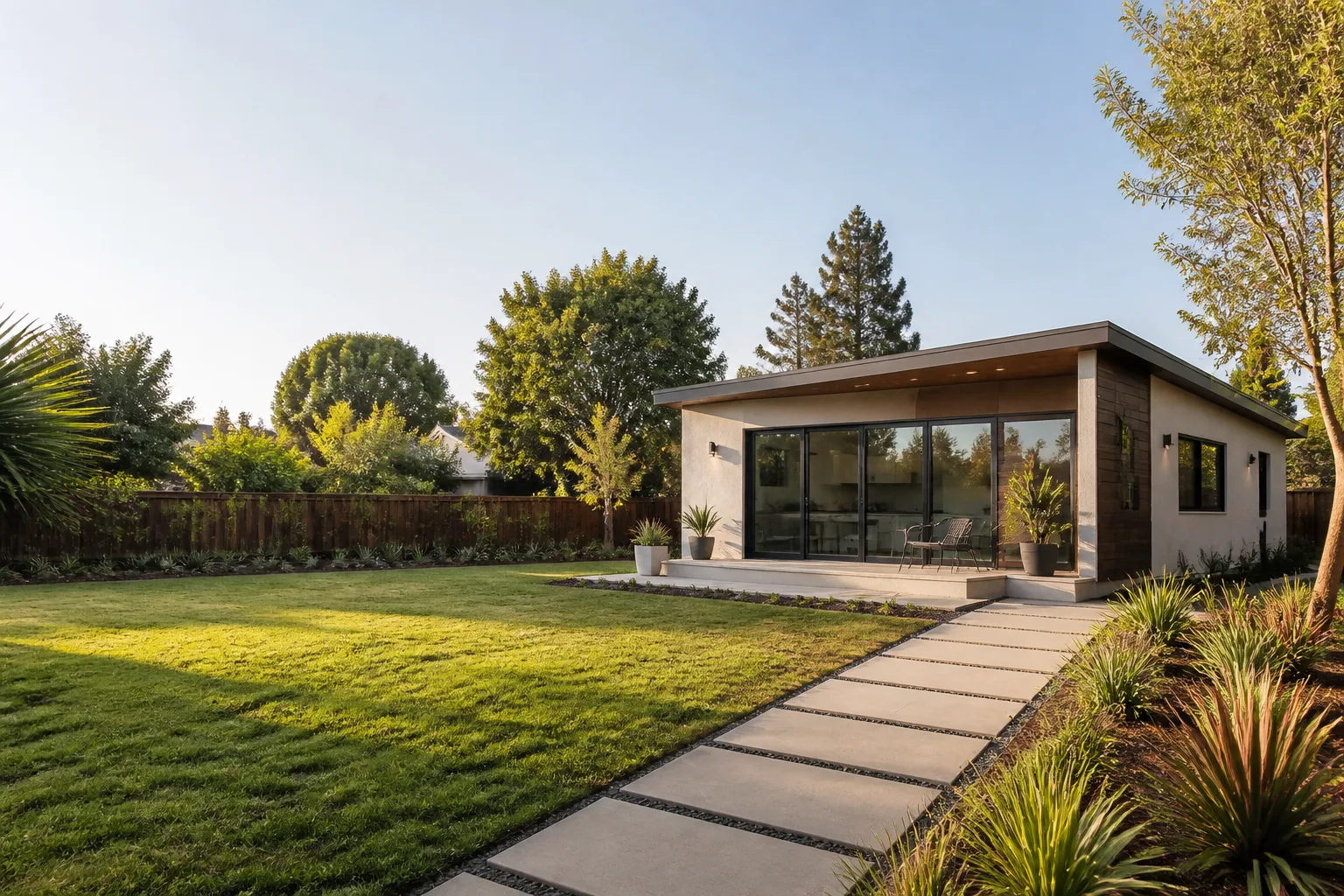
We install and build new detached ADUs clad in James Hardie fiber cement siding across Dallas, with full project pricing typically running $180,000 to $320,000 depending on square footage, foundation work, and utility runs. We price the whole build in writing before work starts, and we handle the permit set, the slab or pier foundation, framing, Hardie siding installation, and every inspection through final sign-off. Most Dallas homeowners call us after the siding on an existing structure has failed, or because they are researching whether a Hardie-clad detached unit makes sense on their lot before committing to prefab platforms like Abodu, Cover, or Dvele.
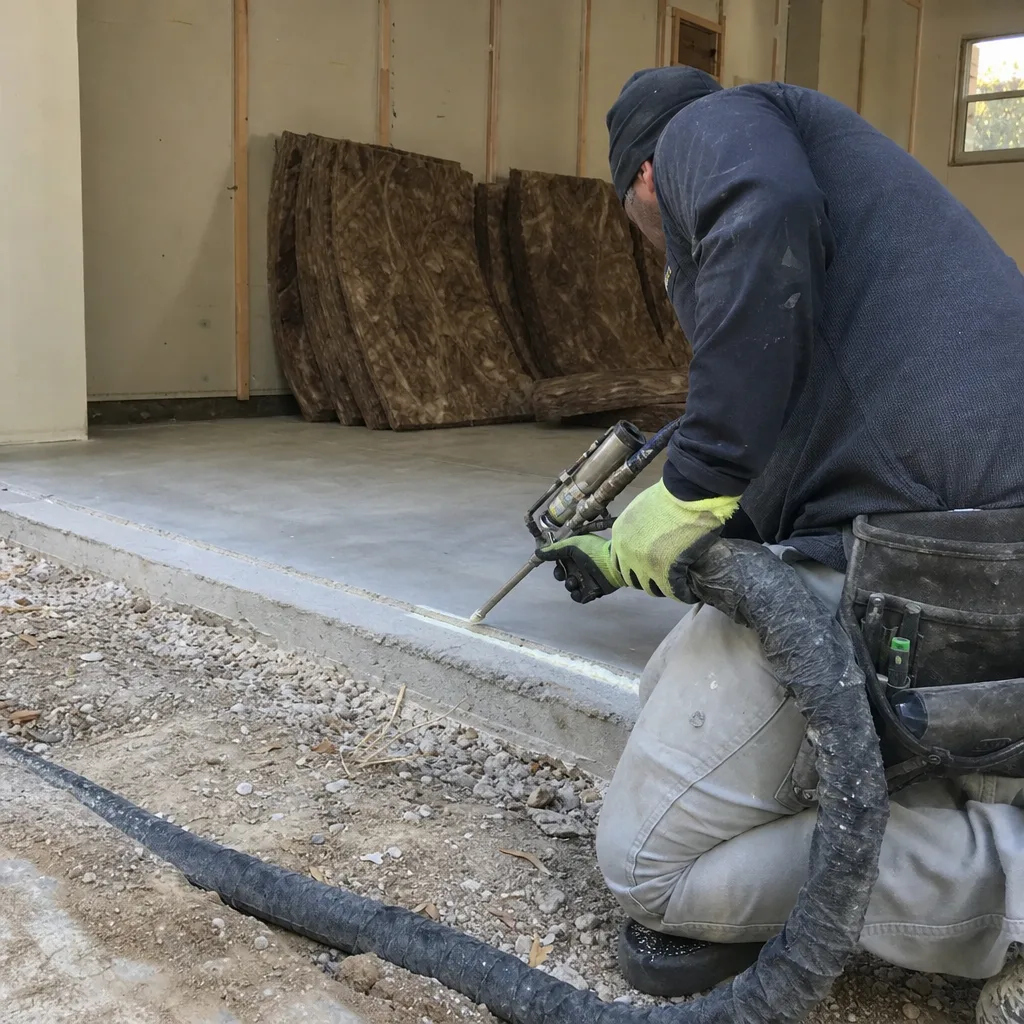
The most common way this conversation starts: a homeowner has a detached structure that was built with James Hardie plank or panel siding, and after five to eight Dallas summers, they see buckling, gaps at the seams, water staining at the bottom course, or fastener pops. They want to know if the siding can be salvaged, what a full re-side costs, or whether they should stop patching an aging garage and build a proper detached ADU instead. We answer that question by looking at the structure, the existing Hardie product line on it, and what the lot will actually allow under Dallas development code.
Which James Hardie Models This Applies To
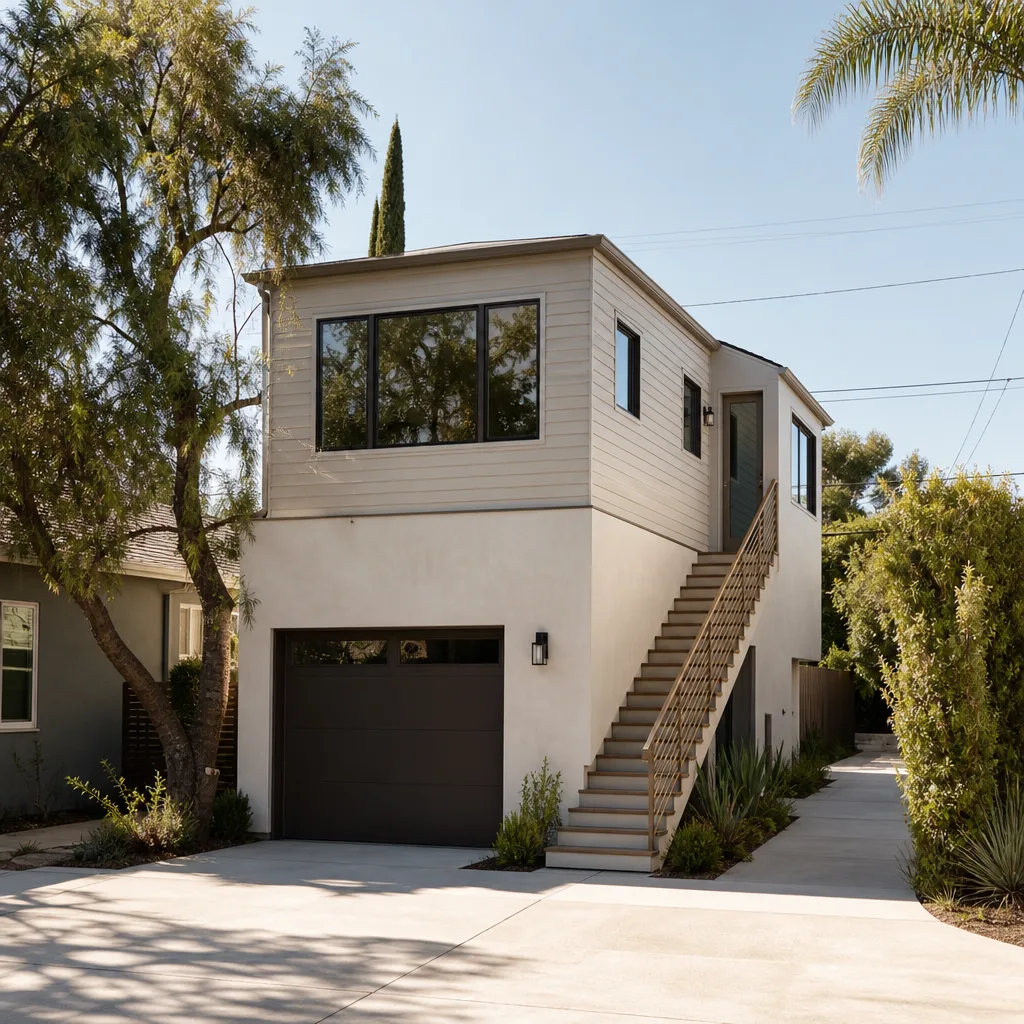
James Hardie siding falls into a few product families, and the failure pattern differs by line. HardiePlank lap siding is the most common on detached structures in Dallas, installed in 5/16-inch and 7/16-inch thicknesses with exposure widths from 4 to 8 inches. HardiePanel vertical siding comes in 4×8, 4×9, and 4×10 sheets, and we see it on more contemporary ADU builds. HardieShingle is the least common on detached units here, but it shows up on gable ends and accent walls. The newer Hardie Architectural Collection, including the Artisan line with its thicker profile and deeper shadow lines, is what we now spec on most new detached ADUs where the homeowner wants a more substantial look.
The identification part matters. If you are looking at a failed section of siding on an existing structure, the product line is often printed on the back of a removed plank, or you can match the profile and thickness against current Hardie spec sheets. One gotcha we run into in Dallas: older Hardie installations from the mid-2000s sometimes used 6-inch exposure HardiePlank with a smooth finish that James Hardie has since changed at the factory level. The current smooth product has a slightly different surface texture than the older run. If you are patching a small section, that difference will be visible on a sunny afternoon. If you are doing a full re-side or a new build, it does not matter because the entire elevation gets the same product.
Fielding ADU Dallas is an independent builder and is not affiliated with James Hardie. We install their products because they hold up better than wood or vinyl in North Texas heat, but we also work with the prefab platforms a lot of Dallas homeowners are already researching: Abodu, Cover, Dvele, Mighty Buildings, Boxabl, and Plant Prefab. Some of those units arrive with James Hardie siding already factory-installed. Some arrive bare and we clad them on site.
Signs Your James Hardie New Detached ADU Is Failing
- Buckling or waviness along the bottom course. This usually means the siding was installed too close to grade, flashings are missing, or sprinkler overspray has been soaking the bottom edge for years. Hardie is moisture-resistant, but it is not moisture-proof, and Dallas irrigation systems are a common culprit.
- Gaps opening at butt joints. HardiePlank is supposed to be installed with a small gap at each joint, caulked or flashed per Hardie’s current install spec. When installers butt the planks tight, thermal expansion pushes them apart over time. North Texas sees enough temperature swing between January and August to make this show up within three years.
- Fastener heads pushing through or rust staining below nails. This means the wrong fasteners were used, or the nails were overdriven. Hardie requires corrosion-resistant fasteners, and overdriven nails crack the board at the edge. Once water gets behind the siding at those points, you start seeing stains.
- Water staining or soft spots at window and door trim intersections. Most Hardie failures on Dallas ADUs start at penetrations, not in the field of the wall. If the flashing was not lapped correctly behind the trim, water runs behind the siding and you will see stains within a few seasons.
- Chalky or faded finish, especially on west-facing elevations. Hardie’s ColorPlus factory finish lasts longer than field-applied paint, but direct afternoon sun in a Dallas August will break down any finish eventually. Fading alone is cosmetic. Fading plus cracking at the edges is the point where moisture starts getting into the board.
Replacement Cost & What’s Included
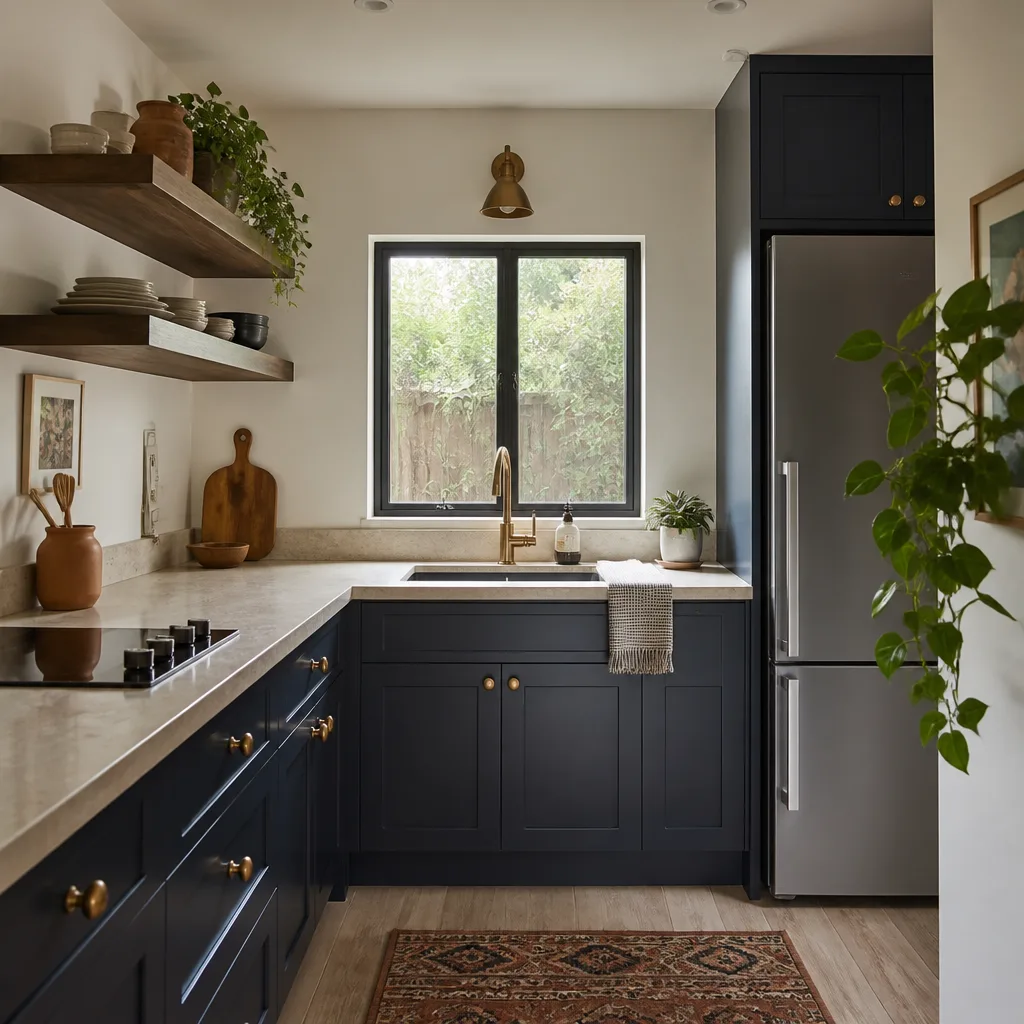
A full re-side of a detached structure in Dallas runs $14 to $22 per square foot of wall area for HardiePlank with standard trim, factory-primed and field-painted. For a typical 400-square-foot detached garage, that lands between $18,000 and $30,000. For a full new detached ADU build with Hardie siding, framing, foundation, electrical, plumbing, and finished interior, the range in Dallas right now is $180,000 to $320,000. A two-story unit, a sloped lot requiring pier work, or a site with poor access pushes the price higher.
Every Fielding ADU Dallas estimate includes a line-by-line breakdown: siding material, trim, flashing, fasteners, paint or ColorPlus finish, tear-off and disposal of the old material, and our labor. We put the price in writing before the first nail goes in. If the scope changes because we open a wall and find rot or termite damage, we stop and give you a written change order before we do anything else. The work is covered by the Garrison Standard: 365 days of written guarantee on workmanship, and if something fails in that window, we return and correct it at no charge.
DIY or Call Us?
There are things you can check safely. Walk the exterior, note where the bottom course sits relative to grade, check the caulk lines at window trim, and look for sprinkler heads throwing water onto the siding. Those observations help you decide whether you have a real problem or a cosmetic one. What you should not do is pull siding off a Dallas structure without knowing what is behind it. Hardie removal on an older build often reveals rot in the sheathing, missing house wrap, or electrical runs that were not installed to current code. Repairing that correctly means pulling a permit in the City of Dallas, and the inspector is going to look at the wall assembly, not just the siding.
If the structure is a detached ADU with living space inside, the stakes are higher. Water intrusion behind Hardie on a lived-in unit means mold risk, insulation damage, and the possibility that the interior drywall is compromised. That is not a weekend patch job. Call (903) 342-8977 and we will come look at it, give you a written scope, and tell you honestly whether it is a repair or a re-side. The estimate is free.
FAQs
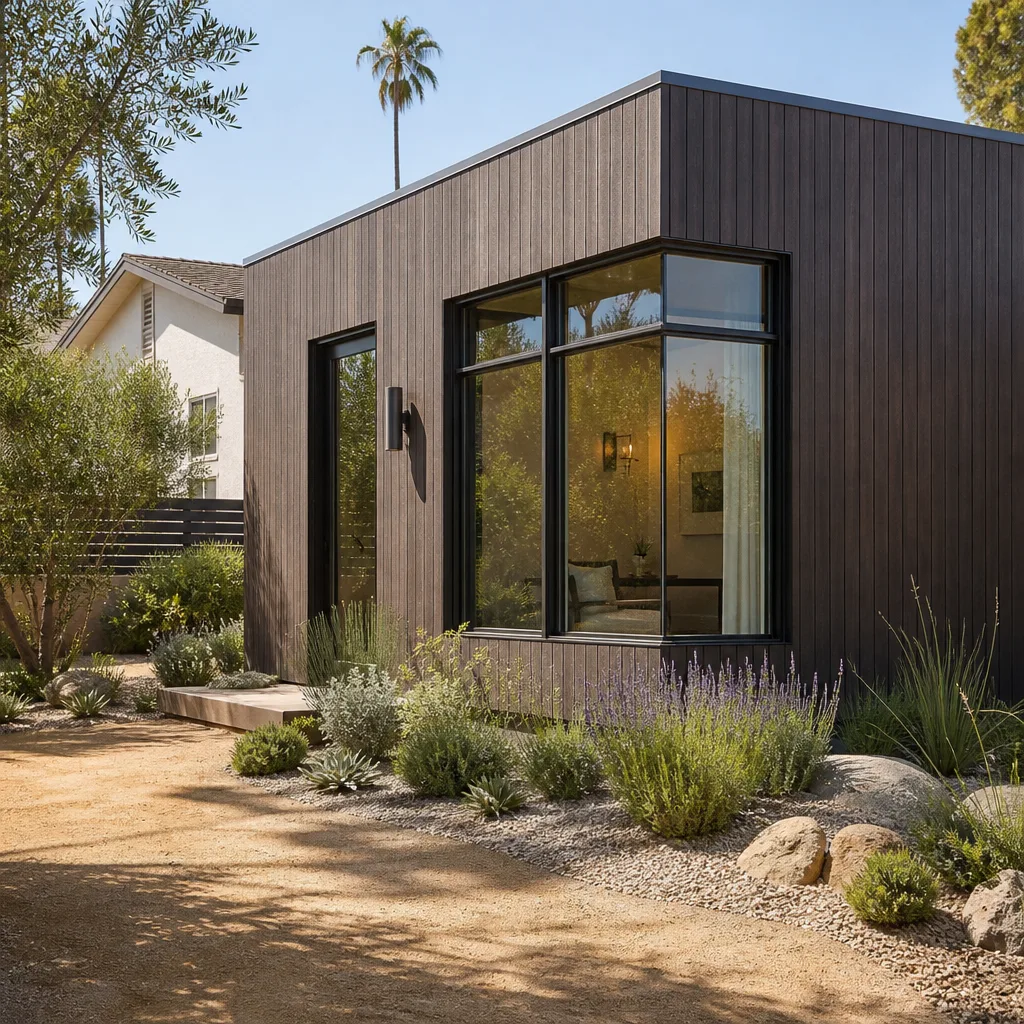
HardiePlank and HardiePanel carry a 30-year limited product warranty when installed per spec, and in Dallas we typically see the ColorPlus factory finish lasting 12 to 18 years on elevations that catch full afternoon sun before the surface needs repainting. The board itself can last substantially longer when the installation details are right: proper clearance at grade, correct flashing at penetrations, and sealed butt joints. The failures we repair in Dallas are almost always installation failures that accelerated the product’s breakdown, not the product wearing out on its own. Call (903) 342-8977 if you want us to look at your structure and tell you which category you are in.
Yes, in isolated sections where the failure is limited to a few planks or one elevation. We can cut out and replace individual boards, match the texture and exposure, and reset the flashing at the problem joint. If the failure involves moisture behind the siding, rotted sheathing, or missing house wrap across a large area, patching it is a temporary fix and we will tell you that plainly. The decision usually comes down to what we find when the first boards come off, and you will know the full cost before we go further. Call (903) 342-8977 and we will give you a straight answer.
A full re-side of a detached two-car garage in Dallas takes our crew four to seven working days, including tear-off, any sheathing or flashing repairs, Hardie installation, and paint. A new detached ADU from permit approval to final inspection runs four to seven months, depending on utility runs, foundation method, and the level of interior finish. We schedule the work and we keep the schedule, and we put that commitment in writing. Call (903) 342-8977 for a timeline specific to your lot.
We keep standard 5/16-inch HardiePlank in smooth and cedar texture, standard trim boards, and the flashing materials we use on Dallas jobs stocked in our yard, because those cover the majority of repair and re-side calls we run. Specialty profiles, the Artisan line, ColorPlus prefinished orders in non-stock colors, and HardiePanel in less common sizes are special-ordered and arrive in four to ten business days. If you are matching an existing product line, we will confirm the exact spec before we order anything. Call (903) 342-8977 and tell us what you are looking at.
Written by Reed Calloway, Owner, Fielding ADU Dallas at Fielding ADU Dallas, serving Dallas and nearby areas.